
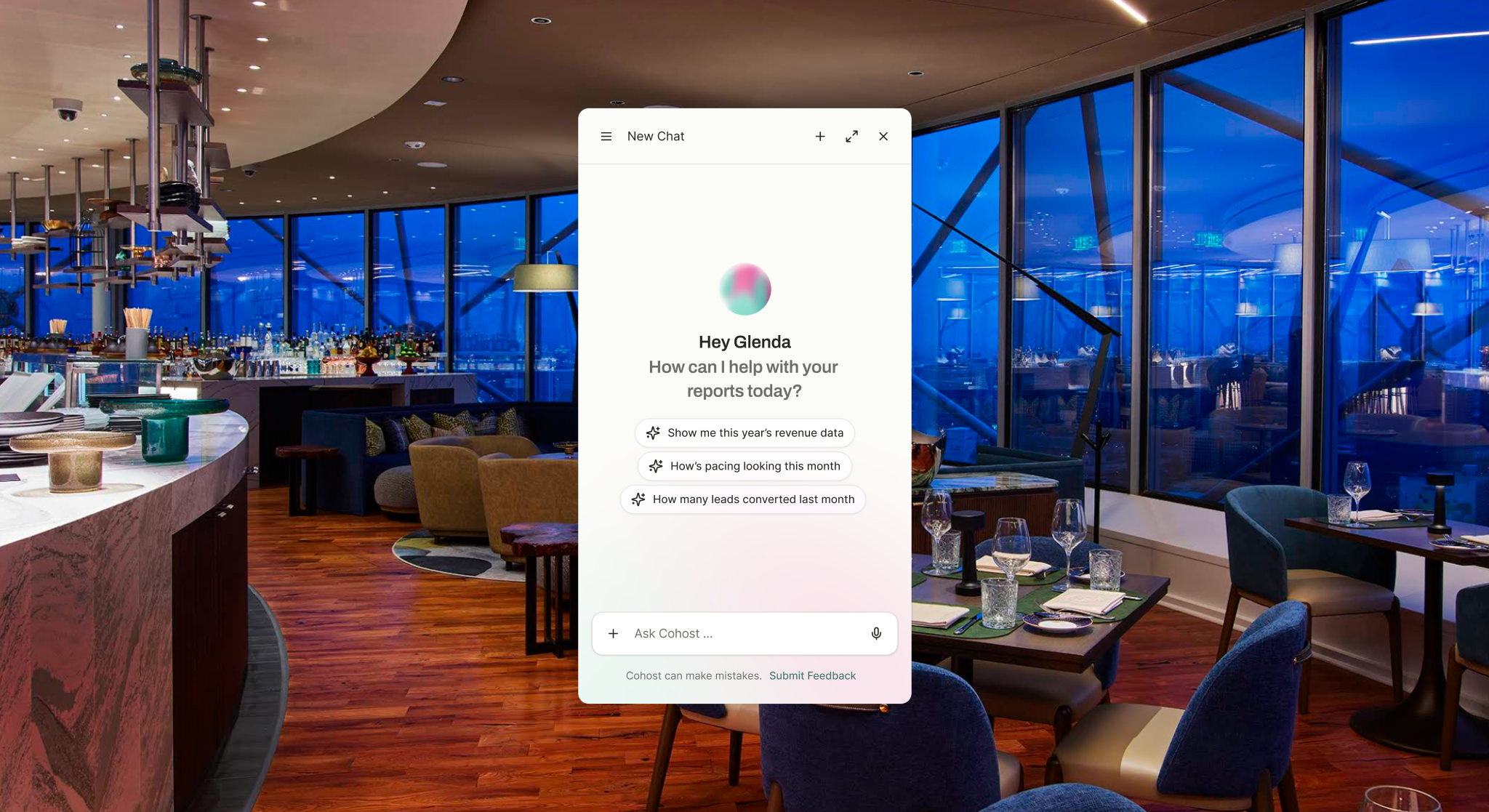
47% web lead conversion increase – replies within 15 seconds – one message from Glenda
For an event sales team, the challenge is rarely a lack of opportunity. It’s keeping up with all of it.
At Crown Block in Dallas, Director of Sales & Catering Glenda Miller, already had a two-person team managing event inquiries. But with leads coming in the door, there was still an opportunity for another set of hands, someone who could help keep conversations moving while the team focused on selling, building relationships, and delivering the kind of experience Crown Block is known for.
Since adopting cohost, Crown Block’s web lead conversion rate rose from 17.8% to 26.2% — a 47% increase. Cohost replies to new leads in under 15 seconds.
That’s where cohost came in.
Crown Block is a Michelin Recommended restaurant that sits high above Dallas with 360-degree skyline views and hosts everything from intimate VIP dinners in the restaurant to large corporate events in its private event venue, The Crown Room. But this story is about more than adding AI to an event sales process.
It’s about what happens when the people using a product every day help shape what that product becomes.
Meet Glenda, Crown Block’s design partner
When Glenda started using cohost, she did more than put the technology to work. She became a design partner.
A design partner has a direct line to the team building the product. They tell us what’s working, what isn’t, and what they need to do their jobs better. Those conversations don’t disappear into a feedback form. They can directly influence what gets built next.
That distinction matters.
Hospitality teams don’t need another tool that asks them to change the way they work. They need technology that understands how they work and gets better with them.
Glenda helped us see exactly what that can look like.
“Show me everything Bailey touched.”
Glenda gave her cohost a name: Bailey.
As she started working with Bailey, she identified something she wanted to do more easily: see every lead Bailey had interacted with, not only the ones that eventually became bookings.
She told us.
So we built it.
Now, a dashboard filter gives her a way to see Bailey’s conversations in one place whenever she wants to check in.
It’s a seemingly simple workflow improvement, but it illustrates something important about designing AI for hospitality.
The right question isn’t only, “What can the technology do?”
It’s also, “What does the sales team need to see, control, and trust?”
For Glenda, visibility was part of that equation.
Then Glenda changed the rules herself
As Glenda reviewed Bailey’s conversations, she noticed something that didn’t match the way she wanted her team to sell.
Bailey was asking prospects about their budget early in the conversation.
That wasn’t how Glenda wanted to approach the sales process.
So she changed the rule herself.
She went into her settings, told Bailey not to ask about budget, and the change took effect.
No waiting for someone to update the system for her. Glenda could adjust how cohost worked based on the way her team actually sells.
That’s important because hospitality teams know their guests, their brand, and their sales philosophy. Their technology should give them the ability to put that knowledge to work.
Then came the lead that made everything click
Of course, features are only interesting when they solve a real business problem.
A corporate holiday party inquiry came into Crown Block for 140 guests.
Within 15 seconds of the inquiry landing, Bailey was already gathering the date and headcount. Bailey helped move the conversation forward: sharing the menu, explaining the food and beverage minimum, and continuing the conversation according to the rules Glenda had set.
Then Glenda stepped in.
She sent one message.
She saw how quickly the prospect was moving, recognized that as her signal to jump in, and sent the proposal.
The prospect was touring Crown Block the next day.
140 guests. Approximately $52,000 in revenue. One message from Glenda. A venue tour the next day.
That’s the kind of moment that shows what AI can look like when it works alongside an experienced hospitality sales professional.
“We were literally screaming.”
When our team saw what happened, we were excited. Very excited.
We emailed Glenda about it, and her response said it all:
“We were literally screaming.”
Glenda had watched how quickly the guest was moving with Bailey and knew when it was time to step in.
That’s the opportunity with AI in hospitality.
It isn’t about removing people from the process. It’s about helping people spend their time where they can have the most impact.
Bailey can help keep the conversation moving.
Glenda can recognize buying intent, send the proposal, build the relationship, and close the event.
The technology handles the work it’s designed to handle. The sales professional owns the moments that require their expertise and judgment.
What Crown Block’s experience teaches us about AI in event sales
Glenda’s experience points to a bigger opportunity for AI in hospitality.
The most useful AI doesn’t operate in isolation. It works within the workflows teams already understand and gives them more control, not less.
For event sales teams, that can mean more conversations moving forward without requiring a team member to personally handle every step from the beginning.
It can mean greater visibility into the conversations AI is having with prospects, so the sales team knows what’s happening and when it might be time to jump in.
It can also mean more control over how AI represents the venue. Glenda’s decision to change how Bailey approached budget is a simple example: the sales team sets the strategy, and the technology works within those guardrails.
Most importantly, it can give hospitality professionals more time for the moments that need a human.
For Crown Block, that shift shows up in the numbers, not just the story. Since adopting cohost, the venue’s web lead conversion rate climbed from 17.8% to 26.2% — a 47% increase. That’s what it looks like when a two-person team gets another set of hands without losing the human judgment that actually closes deals.
The goal isn’t to automate the parts of hospitality that make hospitality special. It’s to reduce repetitive work so sales professionals can spend more time selling, connecting, and closing.
The future of event sales is human with AI
Crown Block didn’t need another tool for the sake of having another tool.
Glenda needed support that could fit into a fast-moving sales environment, follow the rules she set, and give her visibility into what was happening.
And because she was willing to tell us what needed to change, cohost became more useful for her team.
That’s the promise of a design partnership.
The product gets better because the customer helps shape it. The customer gets more value because the product evolves around the way they actually work.
And the end result is what hospitality sales teams are ultimately after: more opportunities captured, more time spent on the right conversations, and more event revenue unlocked.
Crown Block gave cohost a job to do. Glenda helped us make it better at doing that job.